The average person is often surprised when I tell them that, as a physical therapist, I work out of 3 different gyms that offer personal training in one on one or small group settings. There are some trainers that have offered some pushback to that too (unfortunately). But in my professional experience, working with people who have a need to modify workouts over and over again due to pain, or are scared of trying certain movements in the gym, has produced results for those people in ways that go far beyond their expectations.
This isn’t to toot my own horn here but is more to say that concepts we as health and wellness professionals know should work…actually work! Really, it is two concepts working at their peak at the same time. That’s the key.
Having a well rounded strength and conditioning plan—one that hits accessory movements and main lifts while simultaneously working the stabilizing musculature—as well as improving mobility imbalances that target the “problem” or “at risk area” is crucial.
Specifically doing both of those things at the right frequency is the sweet spot. Neither personal trainers nor physical therapists can truly do all of that for our clients at the same time. We have our scope of expertise and have to use our time with that person to reach the goals we are best at helping them reach through the techniques we are best at implementing.
I am far less skilled at scaling a program to help a client achieve a higher max deadlift goal. A personal trainer is likely less skilled at picking up on compensatory movement patterns. If these patterns are present, it would result in pain or would be a direct result of pain. Notice I didn’t say either profession is bad at or can’t do those things, just less skilled, as those skills are not something those respective practitioners do day in and day out.
That is why we have to work together.
My clients who see multiple health and wellness providers achieve goals way better and faster than those who are only seeing me. If a client is seeing a personal trainer and is not working the key stabilizing muscle groups, as well as improving key areas of mobility outside of the 2-3 sessions a week, they will be held back in their goals.
I love helping clients take something that already is helping them achieve a level of function and freedom, they didn’t think they could have, and making those efforts work even better than they already are.
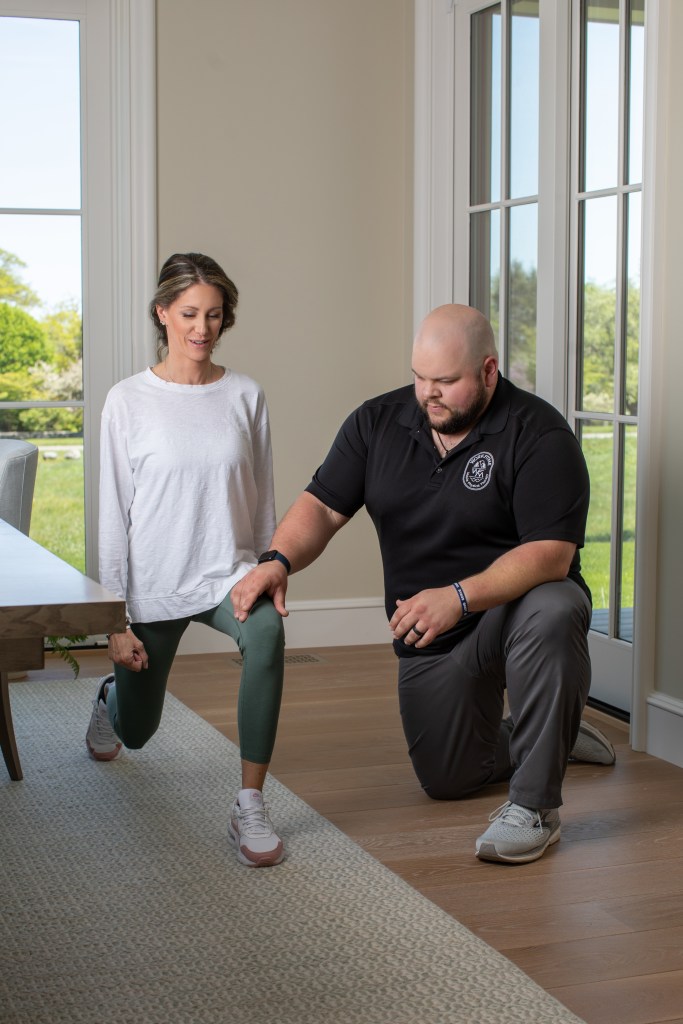
– Dr. Phil Finemore, PT, DPT, Cert. DN, Cert. VRS is the owner of WorkFitME Mobile PT where he helps hardworking Maine professionals build a resilient body they can be confident in to do more of what they love with who they love. Phil worked in the outpatient traditional medical system for 5 years and realized there has to be a better way to do things. A better way to show people the value of what a physical therapist’s skillset has to offer. In founding WorkFitME, he set out on a mission to show people that there is a way to prevent and treat the most common causes of musculoskeletal pain and that things like back pain, neck pain, knee pain and (his favorite) shneck pain (shoulder/neck pain) isn’t something we have to live with or work around day in and day out. Mainers work hard for their living and deserve to enjoy that. Phil’s mission is to use his skillset to help them have the happiest, healthiest, and wealthiest life possible while eliminating and preventing the return on avoidable pain and injury.
 The Break Room
One response to “How Can PT Help… PT?!”
[…] we trust when our client’s need something that is beyond our scope of practice. This blog by Dr. Phil Finemore is a great topic to discuss. Ultimately as coaches, we all have one goal in mind, which is to help […]
LikeLike