
Hip and low back pain prompt many to seek evaluation and treatment from physical therapists or medical professionals. Yet, it’s uncommon for sports or orthopedic physical therapists to possess pelvic floor training. Conversely, not all pelvic floor physical therapists stay updated with optimal orthopedic practices. This blog aims to spotlight the pelvic floor’s role in hip and low back pain, underscoring why finding a healthcare provider well-versed in both areas is crucial for effective treatment.
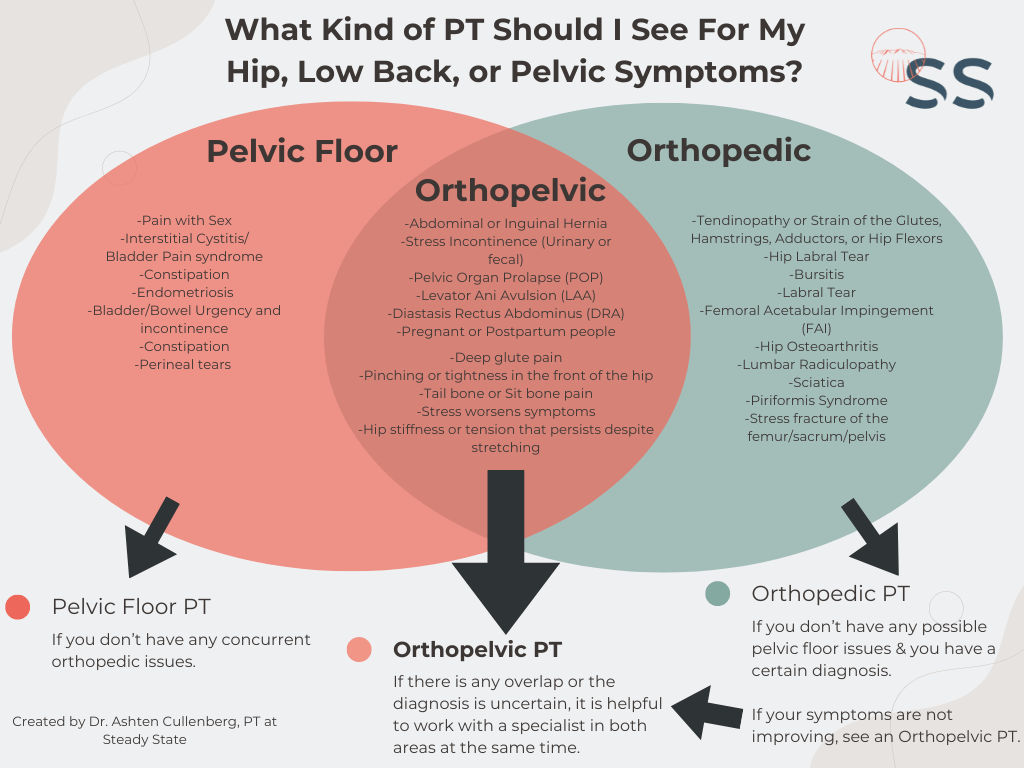
The pelvic floor comprises muscles integral to the deep core musculature. Similar to our deep core, these muscles endure diverse demands. They provide continual low-level contraction and stability during routine activities like standing to cook. Simultaneously, they handle abrupt increases in intra-abdominal pressure during actions such as coughing, sneezing, and lifting, while also enduring the vertical impact forces associated with running and jumping. These functions occur involuntarily, ideally maintaining continence and being pain-free without discomfort or heaviness.
The pelvic floor indirectly contributes to hip and low back pain, similar to how core muscles influence these issues. Furthermore, it can be the primary source of pain radiating to the back, hip, and even down the leg. Pelvic floor dysfunction might either be the root cause of the problem or coexist with primary hip or low back conditions. Without assessing both the hip/back and the pelvic floor, discerning whether pain solely originates from the low back/hip or involves the pelvic floor becomes impossible. This could be a primary reason why chronic hip/low back issues persist when treated by an orthopedic practitioner lacking specialization in pelvic health. A pelvic floor assessment
might be the vital missing piece!
Direct involvement of the pelvic floor can manifest in various symptoms:
- Gluteal discomfort, unsuccessfully relieved by using a ball or foam roller.
- Persistent piriformis issues. The Obturator Internus, positioned inside the pelvic wall, can cause similar symptoms. This muscle is only accessed via a transvaginal or transrectal pelvic floor muscle exam.
- Chronic sacral, tailbone, or sciatic pain that hasn’t sufficiently improved with standard physical therapy treatment.
- Pain around or within the sit bone. This is an attachment point for the hamstrings & also pelvic floor muscles.
- Anterior hip pain exacerbated while sitting or squatting, not resolved by releasing or stretching the psoas.
- Escalating symptoms during periods of stress or anxiety due to the involvement of the autonomic nervous system.
- Explicit signs of pelvic floor dysfunction, including dyspareunia (pain with sex), incontinence, and difficulty in bladder or bowel emptying.
If a training client is experiencing the above symptoms that hasn’t found relief with traditional strength training or hip and low back treatment, consider utilizing a screening tool. (Email me at ashten@steadystatehealth.com for access). Reach out to a physical therapist proficient in assessing and treating both orthopedics and the pelvic floor. Addressing the pelvic floor in cases of hip and low back pain can result in more comprehensive and effective care, leading to faster symptom resolution and an enhanced quality of life!
*Note from the editor, as a coach, I highly recommend building a circle of trusted professionals who you can refer your clients to when they are in need!*
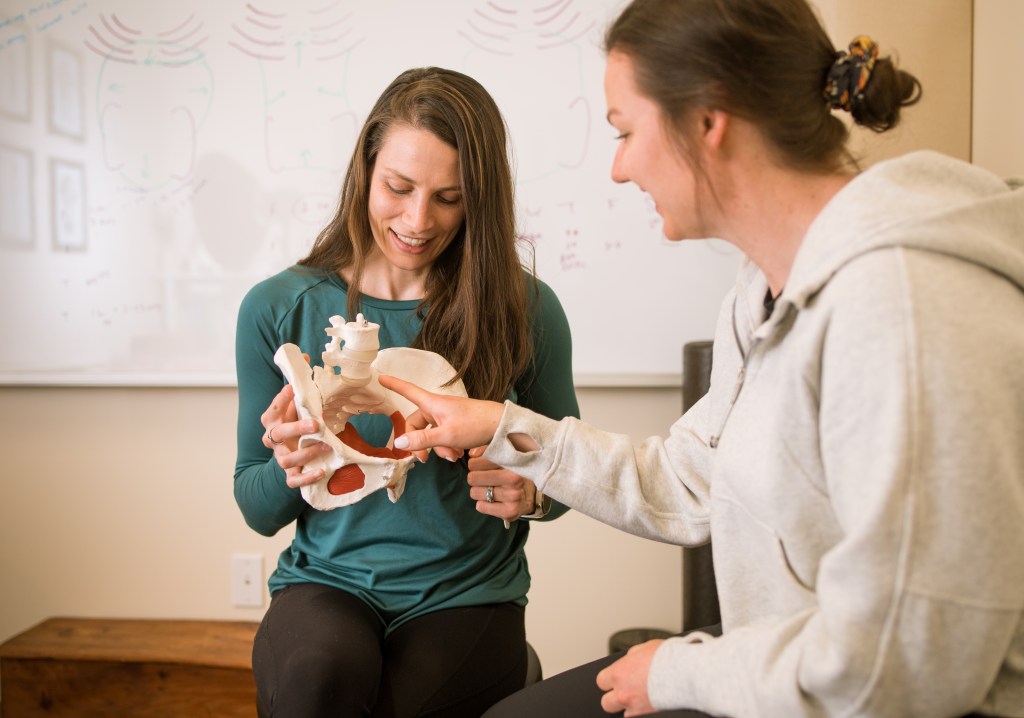
Ashten Cullenberg, PT, DPT, an orthopedic & pelvic floor physical therapist, is the co-owner of Steady State Performance Physical Therapy. With 7 years of experience in orthopedic physical therapy, she sensed a missing component in certain cases. In 2021, she specialized in pelvic floor therapy, recognizing its absence in many assessments. Through continuous learning in this area, she found that evaluating the pelvic floor was the crucial missing link. Ashten strongly believes that while traditional pelvic floor therapy is valuable, it often lacks the necessary progressions for individuals to return to higher-impact activities like running and lifting, free from symptoms. This conviction underscores the significance of orthopelvic physical therapy for runners and lifters experiencing hip, low back, or pelvic floor symptoms.
 The Break Room