Full powerlifting meets are run with squat coming first, then bench press, and finishing off with deadlift. There are 3 attempts each lift, and are organized into “flights”, starting with the person who has the lowest opening lift. Everyone in a flight will all take their first attempt, then second, then third. The number of flights vary depending on the size of the meet, but all flights will do all three attempts of one lift, then everyone will move on to the next movement once every lifter has had their turn.
When we coach our clients, our goal is for them to feel strong. Feel better than how they felt when they came in. Sometimes we have to meet them where they are at, let some things slide in order to keep them feeling strong. When prepping for a powerlifting competition, that is much harder to do. The rules do not cater to each individual. Everyone is required to squat to depth, keep their butt down on bench press, and lockout the deadlift. You can’t let any missed cues slide on those movements.
Meet prep/peak ends up being a couple things-Learning the rules/executing SBD to those standards, and tapering to prepare the CNS.
There are many different federations in powerlifting. Learning the rules of the federation your client is competing in is easy, however rules will slightly vary between federations. Each one may have a different expectation of what squat depth is, or how long the pause needs to be on bench. It is important for you as a coach to be completely familiar with these rules and make sure your client is as well, for the same reasons you would explain to them why they are doing any given exercise.
The main purpose of a meet peak program is to condition the central nervous system. One thing that is guaranteed from a meet, is the CNS being fried. Maxing out takes a huge toll, especially when it’s with all of the big 3 one after another. This is where tapering comes in.
Getting your client to handle a high percentage of their 1 rep max for several weeks is essential. The best method that I have found in my experience as a coach, and as a competitor, is to start at a decent percentage like 70-75% for 5-6 sets of 5-6 reps. Then each week increasing the percentage about 5%, adding 1 set, and dropping 1-2 reps off each set. This gets your client to handle the heavy weight, while keeping up the volume enough for it to be effective. I like to do this for a maximum of 10 weeks, with a reset in the middle, or for a minimum of 4 weeks.
For the rest of the workout after the main work, I tend to focus on strengthening the areas where form is lost. As we know, form is easily lost at our heaviest weights. So in the likely scenario that that happens during the competition, this will help fight through the tough spots. For example, a common problem with deadlift for people is their hips rising too fast, turning the lift into a straight legged deadlift. So making heavy straight legged deadlifts an accessory exercise is great to work in, to strengthen the glutes and hamstrings, and so they know how to fight for the lockout if they end up in that position.
There are many different methods to program for a competition, this is just what I find to be best all around for myself and clients I’ve run this with. Something to also be mindful of and to pay attention to looking at past programming, is how you or your client responds to volume. Some people peak during high volume programs, and some respond to the heavier sets like I previously mentioned. In the instance some peaks well during high volume, all you would need to do is shift the program so the meet lands during a high volume week.
At the end of the day, my #1 goal for someone’s first meet is to absorb the experience and just have fun. Going in with no expectations other than performing well from a rules standpoint, PRs feel great, but so does going 9 for 9!
-Coach Trevor Gallant
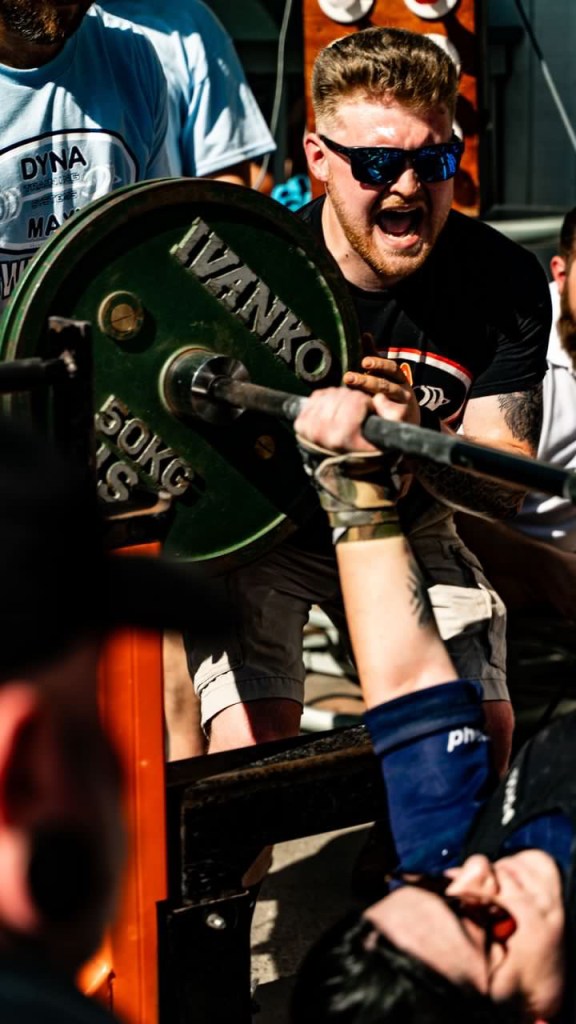
Coach Trevor is a certified personal trainer through National Academy of Sports Medicine (NASM). He’s been coaching for almost 4 years, strength training for about 8 years, and competed in numerous powerlifting competitions. His current total is 1260 pounds between Squat, Bench Press, and Deadlift. He’s competed in both the 165 and 181 bodyweight classes. He is a full time coach here at Iron Legion Strength Co. and runs Barbell Club here at our Westbrook Location.
 The Break Room