Derek is a server who works in a restaurant downtown. He’s on his feet for 8 hours a day during a shift, and carries heavy trays of food and drinks to his guests.
Over the past few months, Derek starts to feel an ache in his lower back after a long day’s work. His friends have told him that strength training might help – but Derek has never done it, has no idea where to start, and is exhausted after a long day’s work.
Our clients, like Derek, walk through our doors with a unique goal in mind. As their personal trainer or coach, our role extends beyond just demonstrating exercises and counting their repetitions.
Derek decides to sign up for personal training, and is presented with the following scenario at his first session:
Trainer: “Derek, I’ll have you do 4 sets of 10 kettlebell deadlifts next. Okay ready, go. One.. two.. three…”
Remember, Derek does not have the knowledge that we do when it comes to exercise prescription, and he is seeking our expertise to understand why we’re having him do deadlifts.
Educating our clients about the “why” behind each exercise as it relates to their goal can enhance their experience during their session, increase engagement and overall success. This understanding creates a sense of ownership over their unique fitness journey.
This explanation includes the physiological benefits, muscle groups targeted, and how each exercise contributes to their goal to help bridge the gap between exercise execution and results.
Let’s revise the scenario above to the following:
Trainer: “Derek, I’ll have you do 4 sets of 10 kettlebell deadlifts next. The deadlift works your posterior chain, which is the entire backside of your body from your upper back down to your calves.
With proper form, and an appropriate weight selection, the deadlift will strengthen your glutes, your hamstrings, and your back – it should help with the lower back discomfort you feel after a hard day’s work. Let’s try this set and see how it feels.”
In this revised scenario, we’ve explained the what and the why as it pertains to Derek’s specific goal. He understands the purpose behind the prescription, and is likely to be more committed to executing the deadlift correctly.
From a coaching perspective, this allows us to look at the programs we write for our clients with a curious eye:
- Are the exercises I’m choosing going to help my client in the way that he or she needs most?
- Are the exercises I’m choosing those that they will enjoy and feel challenged with?
Let’s continue and imagine that Derek has completed his first set of deadlifts:
Trainer: “Great, grab some water and we’ll move on.”
Derek might be someone who is nervous to ask questions thinking they will be “stupid questions”. He may just nod and move on.
Instead, let’s revise this scenario:
Trainer: “Great. How did that feel? Where did you feel that working on your body? Do you have any questions for me before we move on to the next set?”
(We are not rapid firing these questions – we ask a question, then listen)
Perhaps Derek felt lower back pain on his first set, but assumes that is a normal part of strength training. Perhaps he felt the deadlift more in his quads than his hamstrings.
This is where we can use context, our own knowledge of form and technique, and Derek’s questions to help explain how to move forward by either:
- Modifying his form
- Reducing load
- Modifying the exercise altogether
(and again, explaining to him why we’re making that decision!)
Encouraging our clients to ask questions helps us to connect the dots in their understanding. This makes the learning process more enjoyable and engaging.
Imagine that we’re fast-forwarding, and we are several months into training with Derek. At this point as his trainer we have:
- Worked on Derek’s deadlift form and technique, explaining which muscles we’re targeting and where he should be feeling this exercise
- We’ve assured he’s pain-free while he’s lifting, and explained the warning signs he should look out for when lifting (and when/how to modify)
- We’ve explained the concept of progressive overload, and have created a program that will help him strengthen the muscles over time to avoid further injury while he’s at work
This is a lot of knowledge we’ve taught Derek! When clients understand their routine to this depth, and see the logic behind their routines, they can start tracking progress more effectively and appreciate their achievements along the way as they get stronger.
In addition, this level of transparency in explaining exercise choices and training methodologies builds trust between client and trainer over time.
When clients see that you have a solid rationale for your recommendations, and that you are on their side to see them succeed, they’re more likely to follow your guidance with confidence. They know and understand that you have their best interests in mind.
As trainers, we’re not just strengthening people’s bodies. By explaining the why behind the exercises, we’re encouraging a mindset of lifelong learning. Clients who understand the underlying principles of a workout are more likely to continue their fitness journey on their own, making healthier choices in the gym, and beyond the gym.
–Vivian Andreeva, Nova Strength Studio
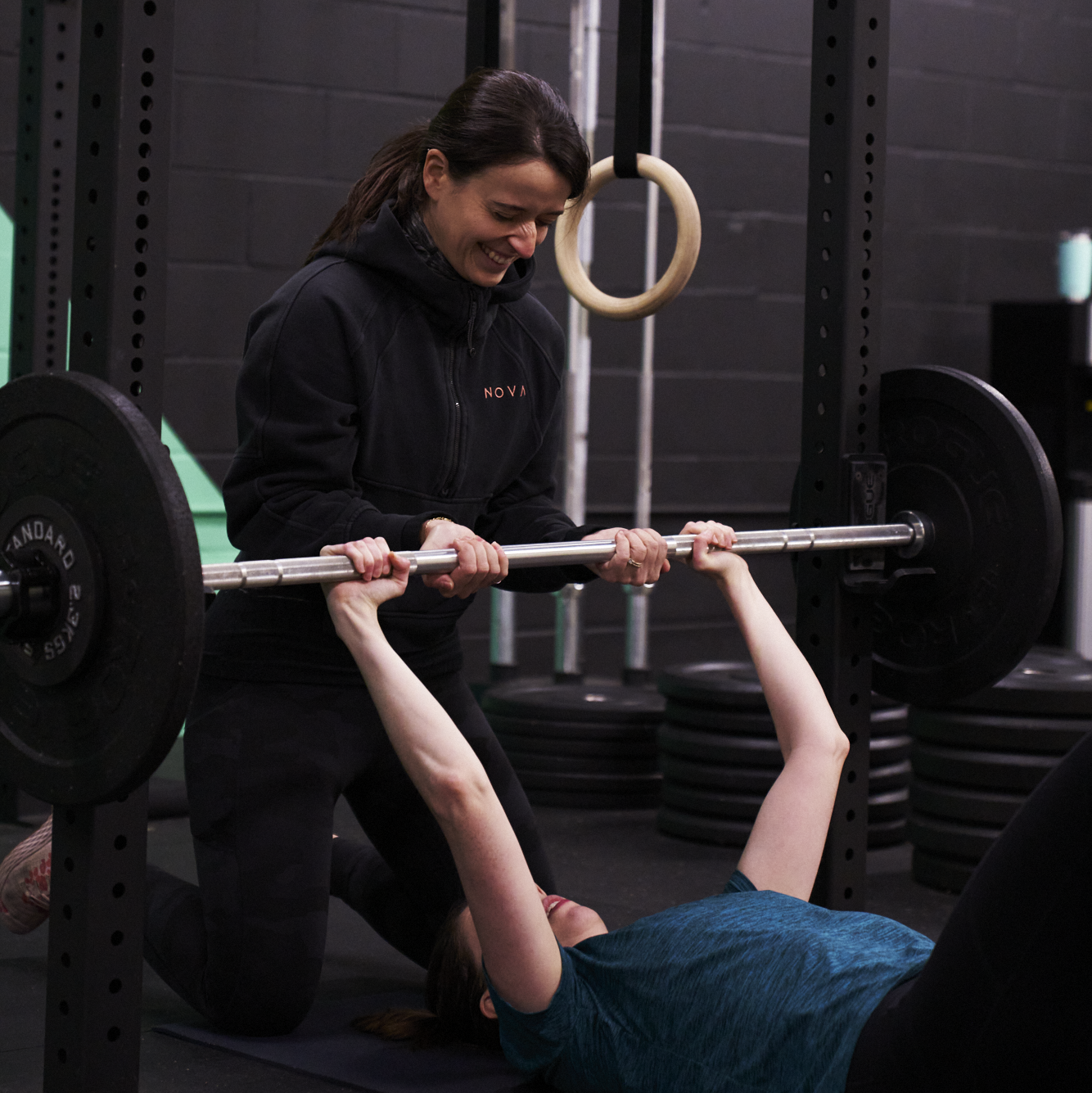
Coach Vivian has been an NSCA certified personal trainer for 5 years. She opened Nova Strength Studio, a personal training studio, located in Melrose, MA two years ago. She is passionate about teaching her clients everything there is to know about strength training safely – by using your own bodyweight dumbbells, kettlebells, and barbells, to get stronger and live a healthier life.
 The Break Room